
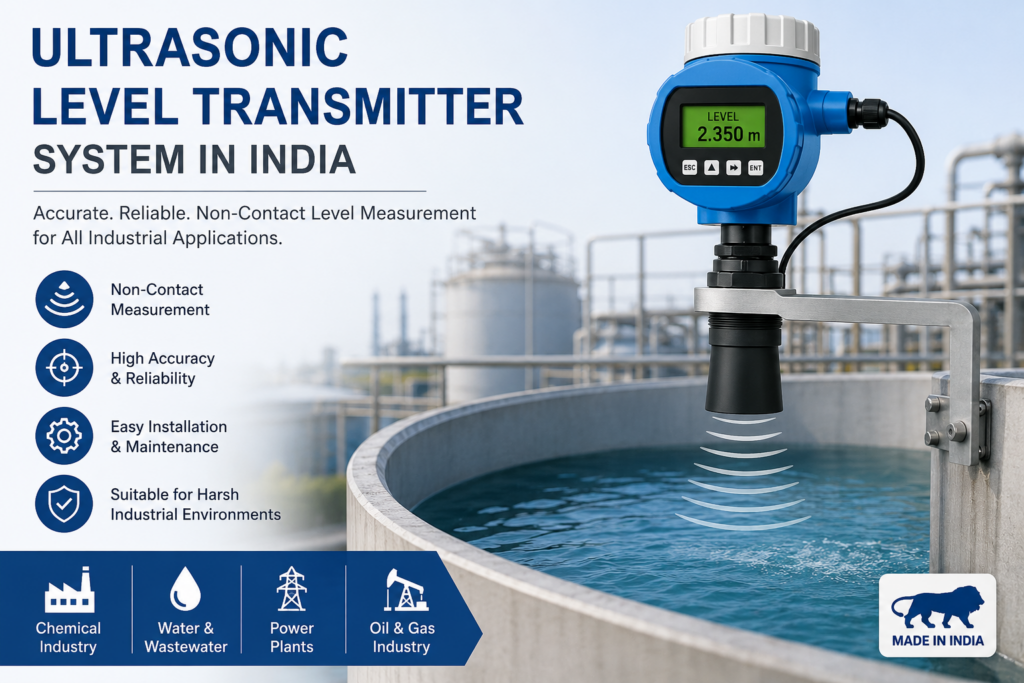
Ultrasonic Level Transmitter System in India
Every industry that stores or moves liquids from water treatment plants to chemical tanks eventually runs into the same problem: knowing exactly how much is inside a tank without opening it up or guessing from a dipstick. This is where an Ultrasonic Level Transmitter System in India is changing everything for plant operators, utility engineers and industrial facility managers. These people need non-contact measurement that they can actually trust. One company helping industries make this switch is AMSET Technologies. AMSET Technologies is an engineering firm based in Pune that builds IoT-enabled sensing and monitoring hardware for infrastructure.
Why Traditional Level Measurement Falls Short
For years, tank level monitoring in India has relied on float switches, manual dipping or basic mechanical gauges. These methods work. However, these methods only work up to a point. Floats get stuck, mechanical parts corrode in harsh chemical environments, and manual checks are simply too infrequent to catch sudden changes like a leak, an overflow, or an unexpected drop in supply.
An Ultrasonic Level Transmitter System in India helps solve this problem by using waves instead of touching the liquid. A transmitter is placed above the liquid to send a pulse down. The transmitter then measures how long it takes for that pulse to bounce back. This allows the transmitter to calculate the level in real time. Since nothing touches the liquid, there is less wear and tear. You do not have to worry about corrosion or stopping your work just to check on the equipment.
How the Technology Actually Works
The main idea is quite simple. The engineering behind the technology is very important:
● Non-contact sensing. The transmitter stays above the tank or reservoir. This means an Ultrasonic Level Transmitter System in India works well with liquids that are corrosive, thick or dangerous.
● Continuous real-time readings. The levels update all the time of just at set times. Because of this, you can catch changes to the liquid level immediately.
● Temperature compensation good systems automatically adjust for temperature shifts that can otherwise distort sound-wave readings.
● When SCADA and IoT dashboards are integrated, data flows into a central monitoring system, allowing engineers to see many tanks on a single screen instead of walking around the site.
This last point turns a sensor into a real management tool. Once tank data is in place, operators can set automatic alerts for high or low thresholds to catch slow leaks before they become costly and produce usage reports, without manual data entry.
Where This Technology Makes the Biggest Difference
Ultrasonic level sensing isn’t limited to one type of facility. It’s used across a wide range of Indian industries, including:
1. Municipal water distribution systems and sewage facilities, where reservoir information is vital for effective distribution
2. Chemicals and pharmaceuticals industry, where contact sensors could cause contamination or corrosion problems
3. Food and beverage processing, where hygiene requirements demand non-contact measurements
4. Agricultural and irrigation storage, where remote tanks benefit from automated monitoring rather than manual site visits
In each of these cases, the appeal is the same: fewer manual checks, fewer surprises, and data that operators can actually act on rather than just record.
Why Pune Has Become a Center for This Kind of Engineering
Pune’s growing reputation as an industrial technology hub isn’t limited to software it extends into hardware-driven sensing solutions like these as well. The city offers a rare combination of skilled engineering talent, established manufacturing supply chains, and a strong culture of hands-on product testing, which makes it a natural base for companies building rugged, field-ready equipment. It’s part of the reason several providers of an Ultrasonic Level Transmitter System have chosen to build and test their hardware in Pune rather than importing fully assembled units from overseas.
AMSET Technology fits squarely into this picture. Working out of Pune, the company designs sensors and monitoring dashboards that are built specifically for Indian industrial conditions dusty environments, voltage fluctuations, and temperature extremes that imported systems aren’t always tuned for. Rather than treating India as an afterthought market, the firm designs from the ground up for local operating realities.
What to Look for Before Choosing a System
Not every ultrasonic sensor on the market performs the same way once it leaves the lab and enters a real industrial site. A few questions worth asking any vendor before committing:
● Has the sensor been tested on liquids similar to what you’re measuring, including foam, vapor, or turbulence?
● Does the system offer local data logging if network connectivity is interrupted?
● Can the dashboard scale from a single tank to a full multi-site facility without a costly overhaul?
● Is support available locally, or does troubleshooting require waiting on an overseas team?
AMSET Technologies addresses these concerns directly, offering hardware calibrated for real Indian industrial environments rather than generic global specifications.
As Indian industries continue to modernise their operations, demand for an Ultrasonic Level Transmitter System in India will continue to rise. Higher utility bills, stricter environmental rules and a stronger push for automation all push plant managers toward more accurate measurement tools. Manual checks and old float systems cannot match the speed or precision that operations demand.
Tank level monitoring may not seem like the most exciting part of industrial technology, but mistakes can lead to overflows, shortages, or costly downtime. Choosing a dependable Ultrasonic Level Transmitter System in India, engineered by teams in Pune for real local conditions, is a practical upgrade that pays for itself quickly. With companies like AMSET Technologies building this kind of equipment locally, Indian industries no longer have to rely on imported systems that weren’t designed with local realities in mind.